

The Blasco Ibáñez
Visiting Scholar Program
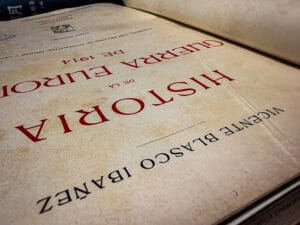
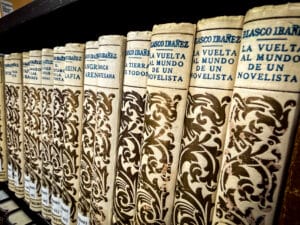
Graduate Students, postdoctoral researchers, faculty, and independent scholars are invited to spend a month in residence.
The Blasco Ibáñez Visiting Scholar Initiative
Whether you are completing a dissertation, shaping a first monograph, or branching out into a new reserach area, the residency is structured so that practical needs recede and your research always takes precedence.
Is this for me?
If you recognize yourself in any of these descriptions, you are squarely within our intended audience:
- Graduate student working on an MA thesis or PhD dissertation.
- Early-career scholar preparing an article or first book
- Established researcher pursuing a new project translation, film, or cultural memory
- Independent scholar with a well-defined research agenda
No formal eligibility restrictions apply—you simply need a serious research project in dialogue with Blasco’s work or its contexts.
Key Benefits
On-campus lodging (up to one month)
Private, fully furnished apartment on the TU campus, available at no cost to visiting scholars for a one-month stay. (Requests for extending your stay or repeating it will be considered)
Private office in Oliphant Hall
Your own workspace in the School of Language and Literature with copying, and campus internet privileges to support daily research.
Daily support for living expenses
Visiting scholars are allowed a $30 per diem to help offset meals and incidental costs during the residency, subject to available funding.
Travel assistance for international and domestic scholars
Scholars can be considered for travel support—up to approximately $1,000 for international visitors and $500 for domestic visitors, when home institutions do not cover such expenses. Availability of travel funds varies by year.
Dedicated faculty contact
From your initial inquiry through your time on campus, you work directly with Dr. Christopher L. Anderson, Professor of Spanish and Comparative Literature, who curates the collection and advises visiting researchers.
Specific funding arrangements are discussed individually with each scholar once an inquiry is received.
A Library Unlike Any Other
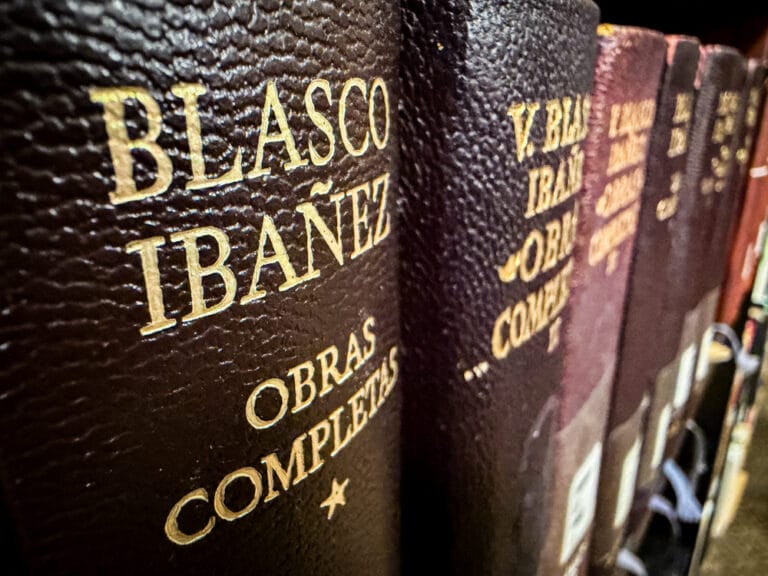
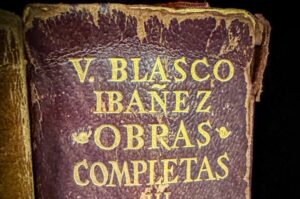
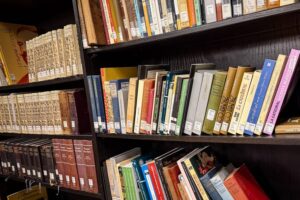
At the heart of the program is the Anderson Collection, housed in Olipant Hall. Introduced in 2025, this collection brings together more than 750 books, films, and related materials devoted to Vicente Blasco Ibáñez and his international reception.
According to WorldCat, at least 32 works in the collection are not held by any other library worldwide, with an additional 92 titles unique to TU within the United States and dozens more found in only a handful of U.S. institutions. This density of rare material allows scholars to reconstruct early and modern responses to Blasco with an accuracy that is difficult to achieve elsewhere.
Among the collection’s 77 Blasco-related titles, more than four-fifths include true first editions—spanning novels, short story collections, political and historical writings, social commentary, speeches, and travel narratives. Here, you can follow the evolution of La horda, La vuelta al mundo de un novelista, or Los enemigos de la mujer across printings, covers, and paratexts that rarely survive in later reprints.
The Anderson Collection is complemented by his private archive, which is also located in Oliphant Hall. This working archive includes:
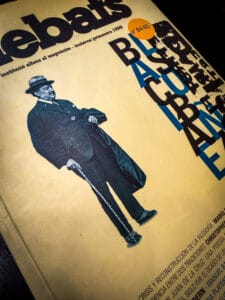
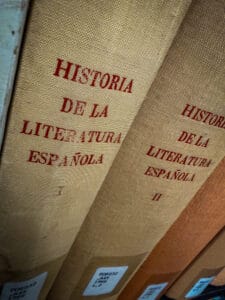
- Approximately 1,700 chapters, articles, reviews, theses, and blogs
- Roughly 3,500 Blasco-related newspaper clippings, advertisements, and announcements from major U.S. newspapers
“A decisive source of inspiration and information for my forthcoming publication.”
— Dr. Cécile Fourrel de Frettes, Université Sorbonne Paris Nord
From Archive to Publication: Scholar Experiences
In early 2025, Dr. Cécile Fourrel de Frettes (Université Sorbonne Paris Nord) spent a month in residence at McFarlin Library, focusing on Blasco’s major “social novels”: La Catedral (1903), El intruso (1904), La bodega (1905), and La horda (1905–1906). Working between the Anderson Collection and the associated press and scholarly archives, she consulted more than thirty bibliographic entries, ranging from early biographies and foundational Hispanist studies to modern criticism.
The residency allowed her to identify rare and out-of-print editions not readily accessible in France or Spain and to reconstruct the intellectual networks that shaped early academic responses to Blasco. The Tulsa materials did not simply confirm existing arguments; they opened new lines of questioning and directly advanced a forthcoming publication on the social novels, strengthening scholarly ties among France, Spain, and the United States.
Dr. Fourrel de Frettes characterizes the collections as “una fuente decisiva de inspiración e información”—a decisive point of departure for both her book project and her understanding of Blasco’s place in the history of academic Hispanism.
- Scholar: Dr. Cécile Fourrel de Frettes
- Institution: Université Sorbonne Paris Nord
- Focus: Social novels — La Catedral, El intruso, La bodega, La horda
- Residency: One-month stay at The University of Tulsa
- Outcome: Advanced monographic project and deepened international collaboration
Could I be next?
- Drafting dissertation chapters on Blasco’s fiction or political writings
- Reframing a book project through reception studies or transatlantic circulation
- Investigating film adaptations, censorship, or press debates around his work
Beyond the Oliphant Hall
Life in Tulsa
A month of focused research does not mean a month spent only at your desk. Tulsa offers a vibrant, arts-oriented environment that becomes part of your intellectual routine—morning walks to McFarlin, afternoons in the reading room, and evenings in a city where music, film, and visual culture are never far away.
Guthrie Green

Guthrie Green is a central green in the Arts District that hosts outdoor concerts, film screenings, and community gatherings. It’s a natural place to close the books for an evening and reflect on the day’s findings under the Oklahoma sky.
Cain’s Ballroom
A legendary nationally ranked venue where generations of artists from Bob Wills and the Texas Playboys, to the Sex Pistols, to Eric Clapton to local artists Hanson have performed. Cain’s is a local treasure.
Bob Dylan Center
A world-class museum, for national and internatioanl visitors, dedicated to modern American songwriting and cultural history, located in downtown Tulsa. Its immersive exhibits on archives, drafts, and creative process resonate strongly with the kind of close textual work that Blasco studies demand.
The Gathering Place
A nationally award-winning riverfront park that offers trails, gardens, and quiet spaces for walking, reading, and thinking through new arguments. Many visiting scholars weave a visit here into their writing routine.
First Friday Art Crawl
On the first Friday of each month, downtown galleries and studios open their doors late into the evening, offering exhibitions, performances, and encounters with local artists.
Tulsa Farmers Market
A visit to a weekly gathering point that brings together local growers, artisans, and residents. It’s an easy way to experience the city’s everyday rhythms and stock your apartment kitchen during your stay.
Woody Guthrie Center
The Woody Guthrie Center preserves the life, music, and political imagination of one of America’s great voices of conscience. For visiting scholars, its exhibitions and archives offer a resonant companion to Blasco’s own commitments to democracy, social justice, and the public power of literature.
Gilcrease Museum
Gilcrease Museum houses one of the country’s major collections devoted to the art, history, and cultures of North America. Founded by Thomas Gilcrease, a citizen of the Muscogee Creek Nation, the museum extends Tulsa’s scholarly landscape beyond the literary archive and into the broader histories of place, memory, and cultural inheritance.
Philbrook Museum of Art
Set in the historic home of Waite and Genevieve Phillips, Philbrook Museum of Art combines expansive gardens with collections that span European, American, Native American, modern, contemporary, African, Asian, and antiquities traditions. It offers visiting scholars a place of visual reflection—part museum, part garden, part architectural encounter with Tulsa’s cultural history.
Living and Working on Campus
Visiting scholars are housed in private, fully furnished apartments on or adjacent to The University of Tulsa campus. From your front door, it is a short walk—often just five minutes—to McFarlin Library and Oliphant Hall. This proximity means that early-morning reading sessions, late-afternoon writing bursts, and quick returns to consult “just one more” edition are logistically simple.
Apartments are designed for comfort during a month-long stay, with basic kitchen facilities, workspace, and internet access. Your office in Oliphant Hall provides a second, dedicated environment for focused writing, while also placing you in daily contact with faculty and graduate students in Hispanic studies, comparative literature, and film.
Many scholars describe the rhythm of their stay in simple terms: coffee brewed in the apartment, a quiet walk across campus under the brick archways and green lawns, hours in the Brown Reading Room with first editions and rare periodicals, and an evening return along the same path—now illuminated, the day’s notes ready to become paragraphs.
The aim is straightforward: to create a setting in which the distance between your living space and the archive is measured in steps, not miles.
Start Your Research Journey
The Blasco Ibáñez Visiting Scholar Initiative welcomes applications from scholars at all career stages:
- Advanced doctoral candidates
- Postdoctoral researchers
- Tenure-track and tenured faculty
- Independent scholars with a defined research project
Residencies are typically one month in length, with visits scheduled throughout the year. There are no formal disciplinary restrictions: we encourage projects in Hispanic studies, comparative literature, history, film and media studies, cultural studies, and related fields, as long as Blasco or his milieu is a central point of reference.
Applications are accepted throughout the year. There is no single deadline; instead, scholars are encouraged to contact the program once they have a research project and lisrt of possible dates. After you reach out, Dr. Christopher Anderson follows up regarding your research interests, potential timing, and available financial support. At that stage, you may be asked to provide a brief project description, a CV, and proposed dates of residence.